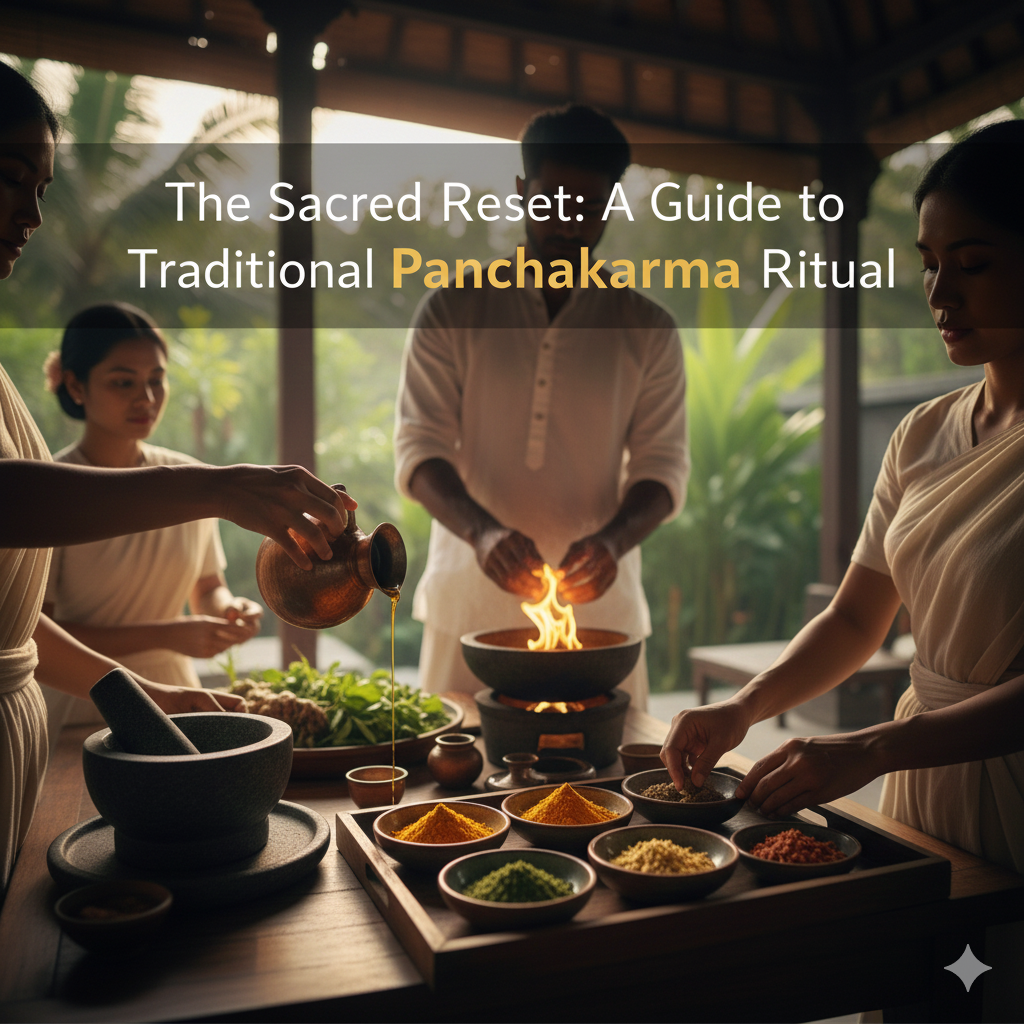
For me, healing is an annual pilgrimage. Each year, I commit to a Traditional Panchakarma Cleanse. Indeed, this process clears the physical and mental toxins that modern life inevitably gathers. Think of it like a deep “engine flush” for the body. Specifically, this ritual resets my Agni (digestive fire). Furthermore, it purifies the Srotas (internal channels) to maintain long-term clarity and health.
Panchakarma is a systematic science. You cannot rush it. The process works because many toxins are “fat-soluble.” These impurities lodge deep within our tissues. Consequently, this Traditional Panchakarma Cleanse follows a precise three-stage progression to release them safely:
Purva Karma (The Preparation): We prepare the body before deep detoxification begins. In particular, internal and external oils loosen deep-seated toxins.
Pradhana Karma (The Five Actions): This is the core phase. During this stage, specific therapeutic treatments eliminate mobilized toxins from the body.
Paschat Karma (The Integration): Additionally, this phase rekindles the digestive fire. We do this carefully as we reintegrate into daily life.
To understand this ritual’s full depth, one must look closely at the central cleansing actions. Specifically, these five procedures, known as Pradhana Karma, serve as the primary methods for removing deep-seated toxins. However, an Ayurvedic doctor will only select the treatments that suit your specific constitution (Dosha).
Vamana (Therapeutic Vomiting): This action focuses on the upper gastrointestinal tract. In particular, it targets excess Kapha (mucus) to clear the lungs and stomach.
Virechana (Purgation): This procedure involves the use of herbal laxatives to cleanse the gallbladder and liver. Consequently, it is highly effective for clearing Pitta (heat) and purifying the blood.
Basti (Enema Therapy): Indeed, Basti is often considered the most important of all five actions. Practitioners use medicated oils and decoctions to balance Vata (air/space) within the colon.
Nasya (Nasal Administration): This treatment involves applying herbal oils through the nasal passages. As a result, it clears the sinuses and enhances mental clarity by stimulating the “doorway to the brain.”
Raktamokshana (Bloodletting): Additionally, this rare procedure involves the careful purification of the blood. It targets complex skin conditions or intense heat-related imbalances.
Importantly, these actions only work effectively after the body has been softened during the preparation phase. Therefore, the transition from mobilization to these core procedures must be handled with professional care.
Imagine washing grease off a pan with cold water. It doesn’t work. You need heat and oil. Similarly, your body must undergo mobilization during a Traditional Panchakarma Cleanse:
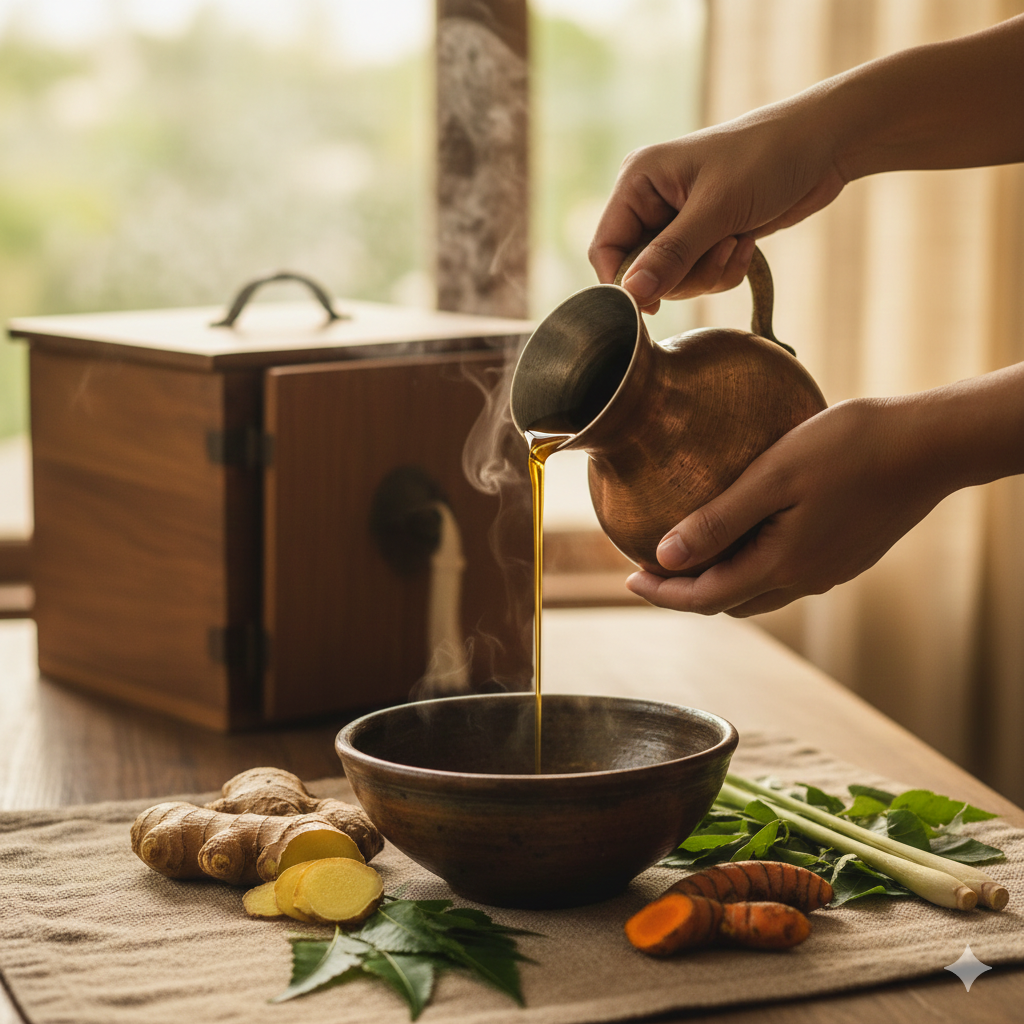
Snehana (Oleation): We saturate the body with medicated oils. As a result, the oil “wraps” around toxins so they slide out of the tissues easily.
Swedana (Sudation): Furthermore, herbal steam treatments dilate the channels. This allows toxins to flow freely into the digestive tract for elimination
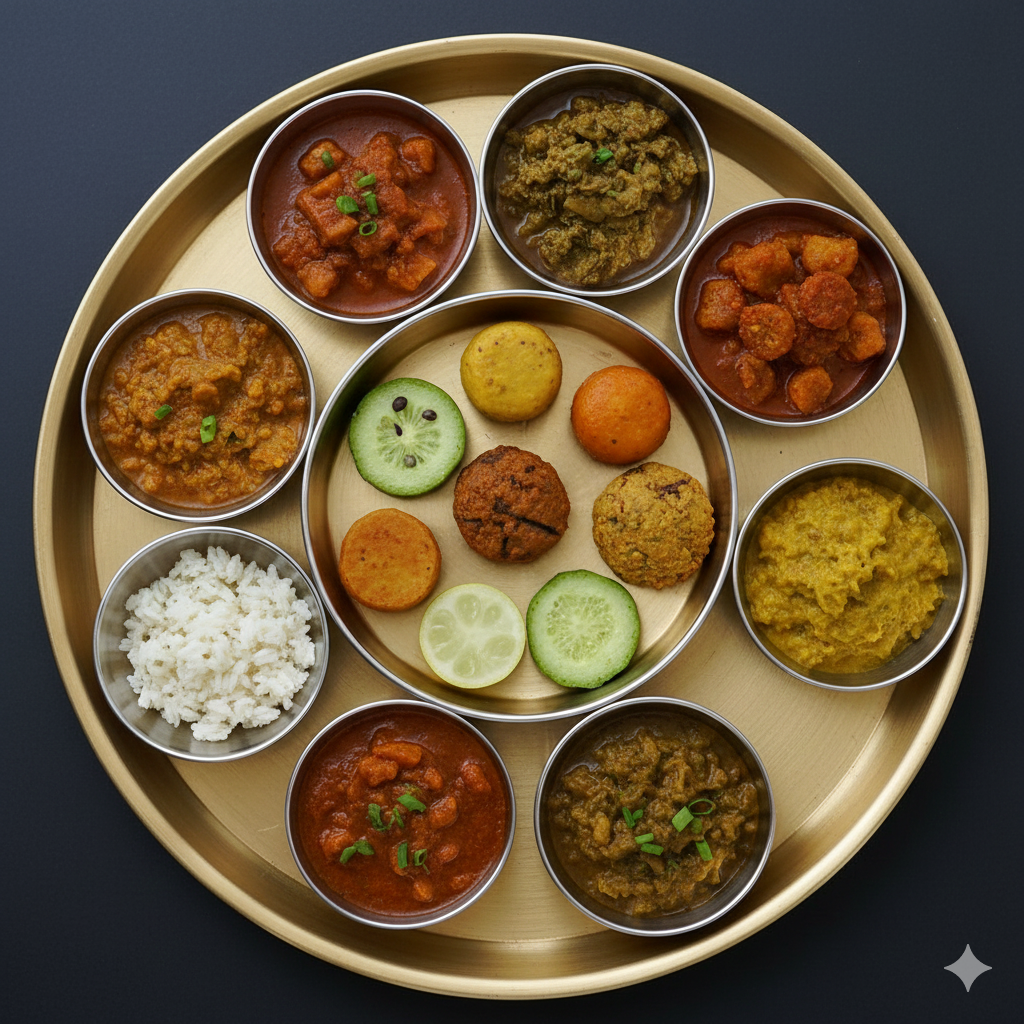
Importantly, the work continues after the detox. Your body is now a “clean slate.” This rebuilding phase (Paschat Karma) ensures the success of your Ayurvedic detoxification:
Samsarjana Krama: We reintroduce foods gradually to protect the delicate Agni.
Rasayana Therapy: Moreover, specific Ayurvedic tonics nourish purified cells and strengthen the immune system.
This ritual triggers significant physical and emotional shifts. For instance, “emotional toxins” often surface as physical toxins leave the tissues. Therefore, you may feel fluctuations in energy or mood. This is a natural sign of the body returning to balance (Prakriti).
Choosing where to go is a personal decision. However, if you want a professional environment for your Traditional Panchakarma Cleanse, you should explore Oneworld Ayurveda.
In summary, this cleanse is a profound investment in your future. Indeed, by finally honoring this ancient science, we allow our bodies the space to heal, renew, and thrive. Are you ready to reclaim your vitality? Specifically, you can start your journey at Oneworld Ayurveda by clicking our affiliate link. By using the code DNRSPORE, you receive these exclusive savings at no additional cost to you, while we may receive a commission for the referral to support our work.