Pranayama For Beginners - 3 Basic Techniques For Stress And Energy
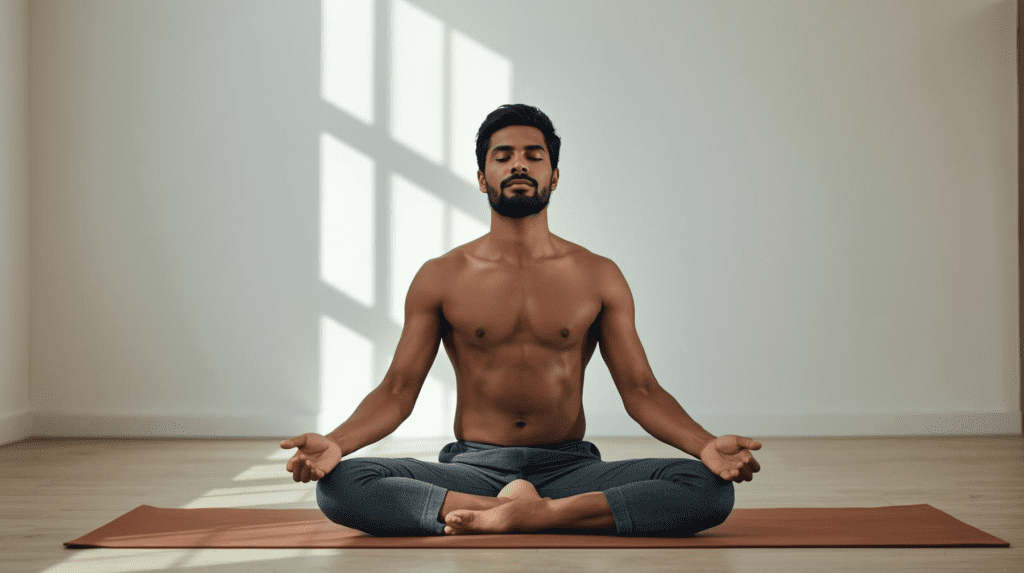
Benefits of Pranayama for Beginners: Energy, Calm, and Focus
While breathing seems automatic, conscious control over your breath (Pranayama) offers profound physical and mental benefits that go far beyond basic survival. Therefore, for pranayama for beginners, understanding these benefits is the key to building a consistent practice.
Nadi Shodhana: A Core Pranayama for Beginners
In yoga philosophy, the breath flowing through your two nostrils is connected to two major energy channels, or Nadis:
-
Ida Nadi (Left Nostril): Governed by the Moon (Chandra). This channel is associated with cooling, calming energy and the Parasympathetic Nervous System.
-
Pingala Nadi (Right Nostril): Governed by the Sun (Surya). Similarly, this channel is associated with heating, active, and energizing focus.
Nadi Shodhana (Alternate Nostril Cleansing) purifies and balances the flow between the two energy channels. As a result, this is one of the most accessible ways for pranayama for beginners to start feeling the immediate effects of balancing their energy. Furthermore, by alternating the breath, you harmonize your energetic state, bringing stillness to the mind and preparing the body for deeper meditation.
How to Practice Nadi Shodhana: Step-by-Step
1. The Starting Position:
-
Sit comfortably with your spine straight. You can be cross-legged or in a chair.
-
Place your left hand on your left knee in Gyan Mudra (thumb and index finger lightly touching).
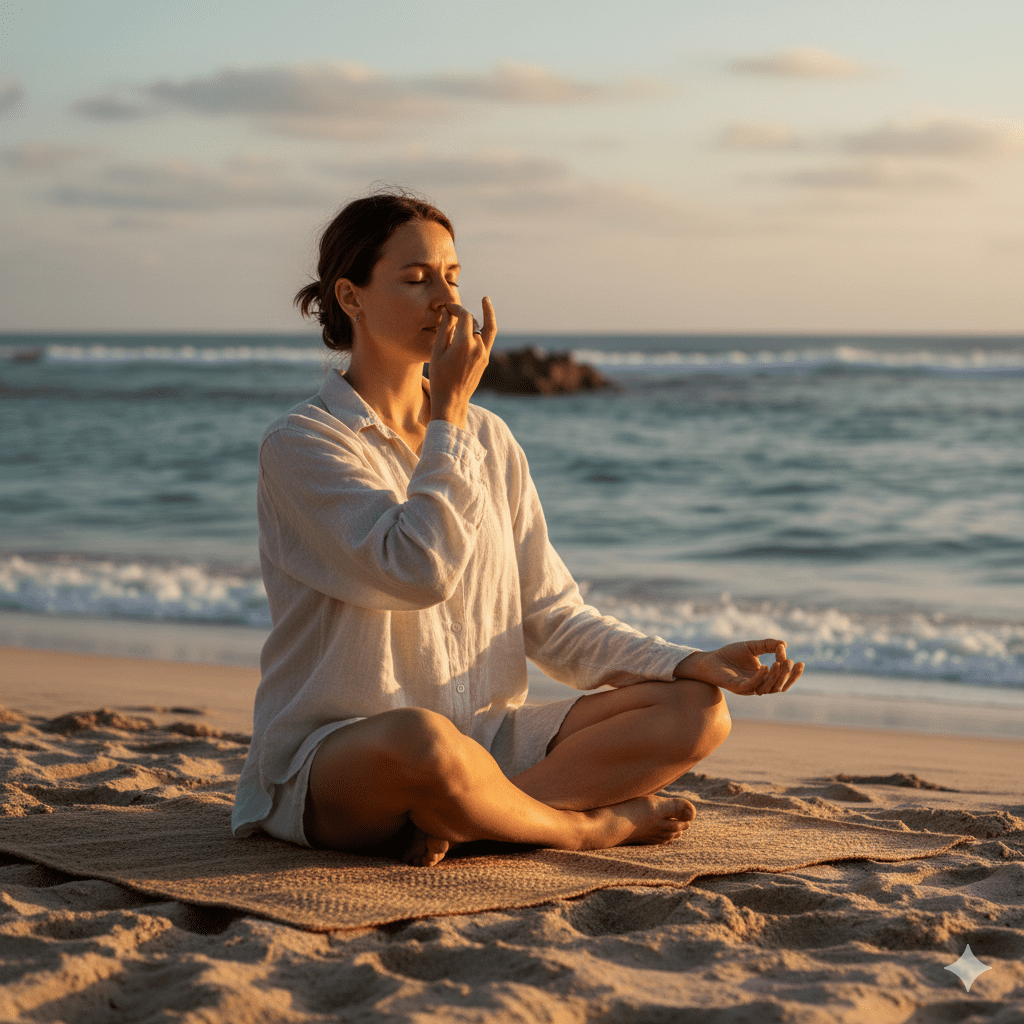
2. The Hand Position (Vishnu Mudra): Bring your right hand up toward your nose. Next,curl your index and middle fingers toward your palm.This posture uses the thumb to close the right nostril and the ring finger (and little finger if needed) to close the left nostril.
3. The Practice (Focusing the Breath):
-
Step A: Gently close your right nostril with your right thumb. Then, inhale slowly and completely through the left nostril.
-
Step B: Next, close your left nostril with your ring finger. Release the right nostril, and exhale slowly and completely through the right nostril.
-
Step C: Next, inhale slowly through the right nostril to continue this pranayama for beginners sequence.
-
Step D: Finally, close the right nostril with your thumb. Release the left nostril, and exhale slowly and completely through the left nostril.
This completes one full round. Continue this slow, mindful pattern for 5–10 minutes. In addition, this foundational pranayama for beginners exercise is key to developing your skills.
If this is your first time practicing pranayama for beginners, take frequent breaks to rest and observe the sensations.
Kapalabhati (Skull Shining Breath)
Often called the “Skull Shining Breath,” Kapalabhati is a dynamic and energizing technique that serves as an internal cleansing practice (Kriya). Specifically, this practice involves a rapid series of forceful exhalations, which the lower abdominal muscles drive, while the inhalation remains passive. This powerful exchange flushes carbon dioxide from the lungs. In fact, it stimulates the digestive fire (Agni) and brings a bright, clear feeling to the mind—hence the name, “Skull Shining.” Consequently, this is an excellent morning practice to replace coffee and boost metabolism. Furthermore, for pranayama for beginners, focus on slow, deliberate contractions before increasing speed. Using these more dynamic techniques helps build internal heat and mental clarity.
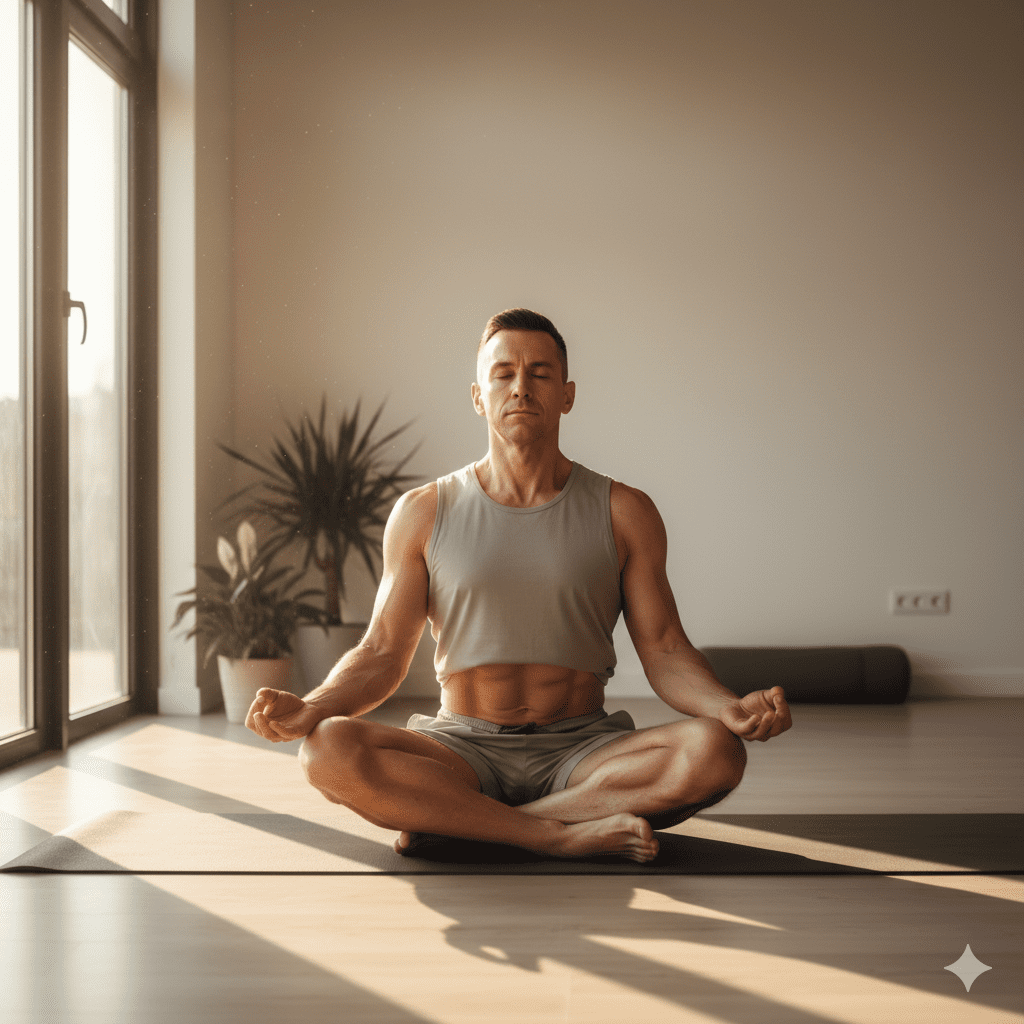
How to Practice Kapalabhati: Pranayama for Beginners Guide
The Starting Position: Sit up tall with a straight spine, relaxed shoulders, and your hands resting on your knees.
The Focus: The effort is entirely on the exhale. The inhale should be automatic, passive, and quick. To begin, place a hand gently on your lower belly to feel the abdominal muscles contracting inward on every exhale.
The Practice:
Step A (Prepare): Take a deep, slow initial inhale.
Step B (The Pulse): Exhale sharply and forcefully through the nose, drawing the navel deeply back toward the spine.
Step C (Passive Inhale): Release the abdominal contraction and allow the inhale to happen naturally and automatically (like a quick recoil).
Step D (Repeat): Continue the rapid, rhythmic series of forceful exhales and passive inhales. Initially, start slowly (around 20-30 pulses) and gradually increase speed as you become comfortable. This specific pranayama requires focus.
Completion: After the desired number of rounds (e.g., 30-60 pulses), take a final sharp exhale, followed by a full, deep inhale. Hold the breath gently for a few seconds, then exhale completely. Rest and observe the feeling of energy and clarity.
Bhramari (Humming Bee Breath)
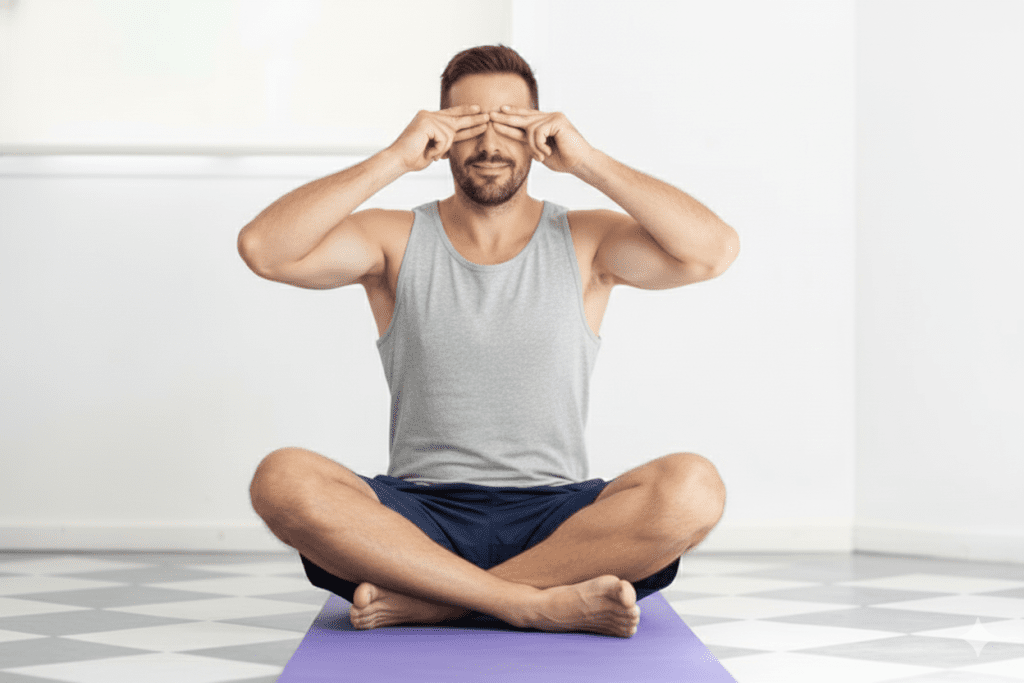
Bhramari, commonly known as the “Humming Bee Breath,” is the third essential technique in this pranayama for beginners guide. Specifically, this practice is famous for its ability to soothe the nervous system and quiet a racing mind. By creating a gentle internal vibration, Bhramari acts as a natural tranquilizer. Consequently, many practitioners find it incredibly effective for reducing anxiety, easing tension headaches, and preparing the body for deep sleep. Furthermore, because it requires you to focus on an internal sound, it is an ideal pranayama for beginners to use as a bridge into meditation.
How to Practice Bhramari: Step-by-Step
-
The Starting Position: Sit comfortably with your spine tall and eyes closed. Relax your jaw, keeping your lips lightly sealed but your teeth slightly apart.
-
The Hand Position (Shanmukhi Mudra): First, bring your hands to your face. Gently close your ears with your thumbs by pressing on the small cartilage (tragus). Next, rest your index fingers lightly on your eyelids and your remaining fingers along the sides of your nose and mouth.
-
The Practice:
-
Step A: Take a slow, deep breath in through your nose.
-
Step B: Then, as you exhale, make a steady, low-pitched humming sound in the back of your throat—like the buzzing of a bee.
-
Step C: Additionally, focus your attention on the vibration vibrating through your head and chest.
-
Step D: Continue this for 5 to 10 rounds, keeping the exhalation long and smooth.
-
-
Completion: Finally, lower your hands to your knees and sit in silence for a moment. Observe the sense of peace and the quietness of your mind after completing this pranayama for beginners exercise.
Safety and Precautions for Your Practice
While pranayama for beginners is generally safe, practicing with awareness is essential for the best results.
-
Empty Stomach: Always practice these techniques on an empty stomach, ideally in the early morning before breakfast.
-
Listen to Your Body: If you feel dizzy or lightheaded, stop immediately and return to your natural breathing rhythm.
-
Specific Health Conditions: Individuals with high blood pressure, heart issues, or hernia should avoid the forceful exhales of Kapalabhati and focus instead on the calming Nadi Shodhana.
Conclusion: Your Path to Inner Balance
Mastering pranayama for beginners is a journey of reconnecting with your life force. By integrating Nadi Shodhana, Kapalabhati, and Bhramari into your daily routine, you create a powerful toolkit for managing stress and boosting your natural energy. Indeed, these techniques serve as the practical foundation for the Ayurvedic Modernist lifestyle, where conscious breathing is used to optimize high-performance living. At Deep Natural Remedy, we believe that these small, conscious shifts in breathing lead to profound changes in overall wellness.
Which of these three techniques made you feel the most centered today? Share your experience in the comments below! Pranayama works best with proper mudras,dont forget to check our blog on mudras